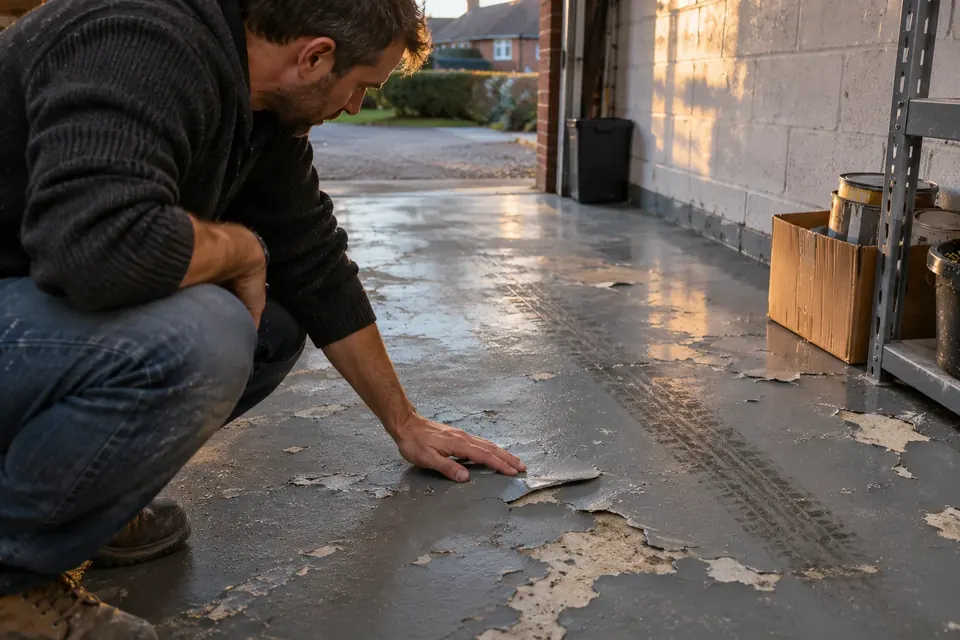
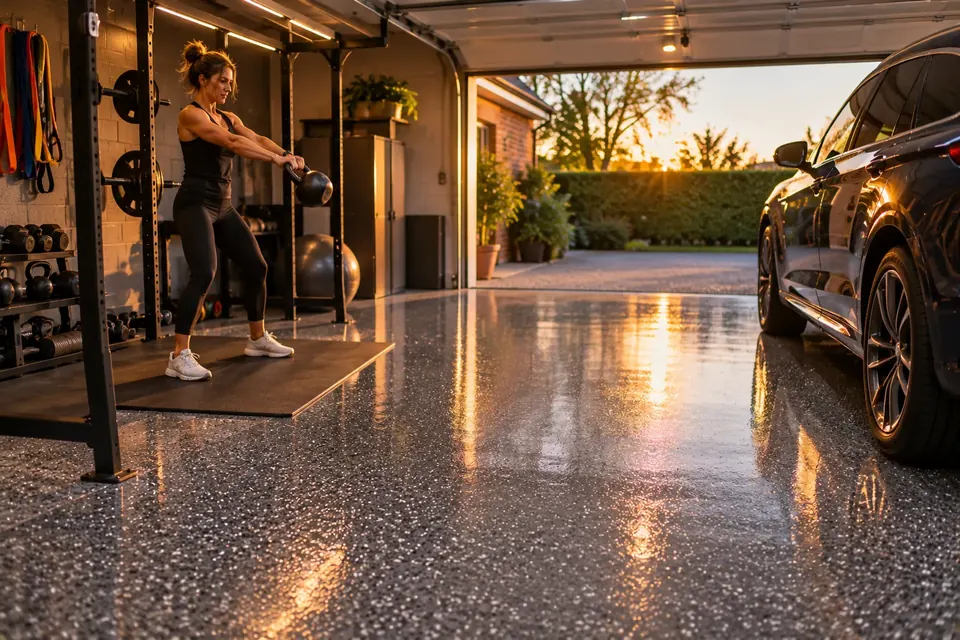
Bubbles in an epoxy floor usually come from air (from mixing or rising out of the concrete) or moisture (from damp in the slab). Yellowing comes from UV light, heat and age. It can’t be reversed in the resin itself. Small surface bubbles are usually cosmetic and can be sanded and recoated. Blisters that grow or feel soft often point to damp and need proper investigation. Yellowing is fixed by abrading and adding a UV-stable topcoat.
Quick guide
| Problem | Looks like | Usual cause | Serious? |
|---|---|---|---|
| Pinholes | Tiny craters | Air escaping from porous concrete | Usually cosmetic |
| Surface bubbles | Small domes, often popped | Air from mixing or rolling | Usually cosmetic |
| Blisters | Raised bumps, may contain liquid | Moisture or solvent under coating | Can be serious |
| Fisheyes | Small round gaps | Contamination like oil or silicone | Cosmetic to moderate |
| Yellowing | Amber or yellow tint | UV light, heat, age | Cosmetic |
| Blushing | Cloudy or greasy film | Humidity or cold during cure | Moderate |
Bubbles and pinholes
Outgassing from the concrete
Concrete is full of tiny pores. As the room warms up during laying, air in those pores expands and rises into the wet resin. If the resin is thick enough and still runny, the bubbles escape. If the resin starts to set, they get trapped as pinholes.
Installers manage this by priming the slab to seal the pores, laying when the temperature is steady or falling rather than rising and rolling with spiked rollers to release air.
Air from mixing
Mixing too fast or with the wrong paddle whips air into the resin. Most of it rises out, but some can get trapped, especially in colder conditions when the resin is thicker.
Fans and draughts
Air blowing across fresh resin can skin the surface over before bubbles escape. That’s why installers often keep doors closed and fans off during laying.
Fixing bubbles
Once cured, small bubbles and pinholes can usually be sanded flat and covered with another coat. On a decorative floor like metallic epoxy, the repair may show, so it’s worth getting right first time.
Blisters
Blisters are different. They’re usually bigger, often raised and sometimes soft or filled with liquid. The most common cause is moisture vapour rising through the slab and building up under the coating. They can also come from solvent trapped between coats.
Blisters can grow and lead to the coating lifting. If you see them, especially in a garage or on an older ground floor, ask an installer to test for moisture. The fix usually means cutting out the blistered areas, dealing with the damp using a moisture-tolerant primer or membrane, then recoating. See why epoxy floors peel.
Yellowing
Why epoxy yellows
Most epoxies amber over time when exposed to UV light. Sunlight through a garage door, conservatory roof or big glass doors speeds it up. Heat and some chemicals can add to it. White, grey and light colours show it most.
Can yellowing be removed?
Not from the resin itself. The change is chemical, so cleaning won’t shift it. The fix is to abrade the surface and apply a UV-stable topcoat, such as polyurethane or polyaspartic. If the colour coat itself has yellowed badly, it may need recoating too.
Preventing it
- choose a UV-stable topcoat in sunny spaces
- consider polyaspartic for garages that get direct sun
- choose mid or darker tones where the floor gets lots of light
We compare the options in epoxy vs polyaspartic.
Blushing and cloudiness
A greasy, cloudy or sticky film is often “amine blush”. It happens when resin cures in cold or humid conditions. It can stop the next coat bonding, so it has to be washed off or abraded before recoating.
When to call the installer
If your floor is new and showing blisters, spreading bubbles or a sticky film, contact the installer in writing with photos. These are usually workmanship or conditions issues and may be covered by the guarantee. Small cosmetic pinholes might not be. Our questions to ask a resin flooring installer includes what to ask about guarantees before you sign.
How installers prevent these problems
Most of these defects are avoidable with the right habits on the day. Experienced installers tend to:
- check the air and slab temperature and the dew point before they start
- prime porous concrete first so air can’t rise into the body coat
- mix with a slow paddle for the time the product sheet gives
- pour the mix out of the tub soon after mixing rather than leaving it to heat up
- roll in even passes and back-roll to release trapped air
- keep fans off and doors shut while the resin is still wet
- recoat inside the window the manufacturer sets
It’s worth asking how an installer handles each of these. Someone who has laid lots of floors will answer without hesitation. Someone who looks blank may be learning on your floor.
FAQs
Why does my epoxy floor have bubbles?
Usually air rising from the concrete or trapped during mixing. Larger blisters can mean damp in the slab.
Will bubbles in epoxy go away?
Not once it’s cured. They can be sanded and recoated.
Can yellow epoxy be fixed?
The yellowing can’t be cleaned off, but the floor can be abraded and recoated with a UV-stable topcoat.
Does all epoxy turn yellow?
Most epoxies amber to some degree in UV light. A UV-stable topcoat protects the colour.
Find a checked installer near you
Need a floor checked or recoated? Find installers near you and check each firm’s Legit Score before you ask them round.