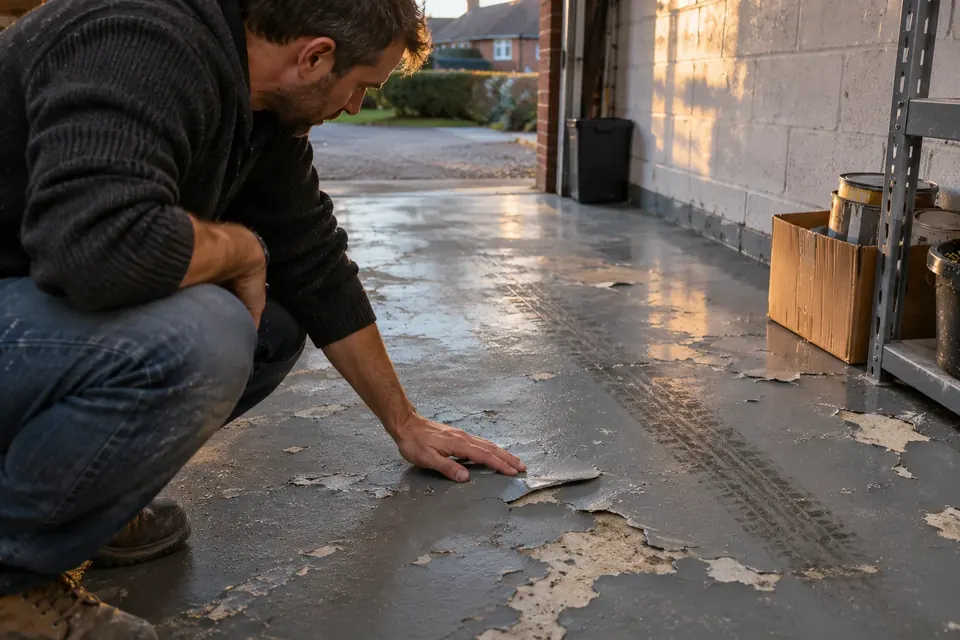
Most resin driveway problems come from what’s underneath or the weather on the day, not the resin itself. Cracks usually follow cracks in a weak or moving base. Loose stones point to too little resin, poor mixing or rain during laying. Darkening comes from non-UV-stable resin. Weeds and moss grow in dirt that settles on the surface rather than through it. Most of these are avoided by a sound base, UV-stable resin and laying in dry conditions.
Quick guide
| Problem | Usual cause | Fixable? |
|---|---|---|
| Cracks | Cracked or moving base, no expansion joints | Repairable, may show |
| Loose stones | Under-mixed, wet weather, too little resin | Local patching |
| Darkening or orange tint | Non-UV-stable resin | Often not without relaying |
| Patchy colour | Mixed batches, uneven trowelling | Hard to fix |
| Puddles | Base not porous, poor falls | Needs drainage |
| Weeds and moss | Dirt and seeds on the surface | Yes, with cleaning |
| Oil and tyre stains | Spills, hot tyres on light stone | Usually, with care |
| Sunken areas | Weak sub-base | Base must be fixed |
Cracking
Resin bound is fairly flexible, but it can’t bridge a moving or cracked base. If the old tarmac or concrete underneath is cracked or breaking up, those cracks will usually come through in time. Big temperature changes and heavy vehicles can make this worse.
How to avoid it: Ask the installer to check the base properly. Existing cracks should be repaired. Concrete bases need their joints carried through or treated. A crumbling base needs replacing, not covering. It costs more at the start, which is why it’s priced separately in our resin driveway cost guide.
Loose stones (fretting)
Some loose stones in the first few weeks are normal as excess aggregate works free. Ongoing loss, especially in patches, is not. Causes include:
- too little resin in the mix
- poor mixing, so some stones aren’t coated
- rain or dew during laying or curing
- laying too thin for vehicle use
- heavy turning on a fresh surface
Small areas can usually be cut out and patched.
Darkening and discolouring
Some resins, called aromatic resins, aren’t UV-stable. In sunlight they can darken or take on an orange tint, which shows most on light stone. UV-stable (aliphatic) resins avoid this but cost more. It’s one of the first things to ask about when comparing quotes.
Puddles and drainage
Resin bound is permeable, but only if the base is too. Laid over solid tarmac or concrete with poor falls, water sits on the base and can show as damp patches or puddles. It also affects planning in front gardens. See resin driveway planning permission.
Weeds and moss
A well-laid resin bound surface doesn’t let weeds grow up through it, but dirt, leaves and seeds can collect on the surface, especially in shady spots and along edges. Moss and small weeds can root in that dirt. Regular sweeping and an occasional gentle pressure wash keep it clear.
Stains
Oil, fuel and rubber marks from hot tyres can stain light-coloured stone. Clean spills quickly. For stubborn marks, ask your installer which cleaners are safe for their resin.
Patchy or uneven finish
Every mix is trowelled by hand, so batches must be consistent and joins blended well. Visible lines, colour changes between mixes or uneven texture usually point to rushed work. These are hard to fix after the event, so look at an installer’s older drives before you hire.
Is it resin bound or bonded?
Some “problems” are just how resin bonded behaves. Bonded surfaces lose some loose stone over time and don’t drain through. If you’re not sure what you’ve got, read resin bound vs resin bonded.
How to avoid problems from the start
- Get the base checked in person and priced honestly.
- Ask for UV-stable resin in writing.
- Ask what depth they’ll lay for vehicles.
- Ask what they do if rain is forecast on the day.
- Ask for addresses of drives they laid a year or more ago.
- Check the guarantee covers workmanship and materials.
When to call the installer back
Some problems are worth raising with the installer straight away, especially if the drive is new or still within its guarantee. These include cracks appearing within the first year or two, patches of loose stone that keep growing, visible joins between mixes, dark or orange discolouring and puddles where the drive was meant to be permeable. Take dated photos and contact the firm in writing. A good installer would rather hear about a problem early while it’s simple to fix.
Looking after a resin drive
A little care keeps a resin drive looking good. Sweep it regularly, especially in autumn when leaves can stain and hold moisture. Pressure wash gently once or twice a year to keep the pores open. Clean oil and fuel spills promptly with a cleaner your installer recommends. In winter, use a plastic snow shovel and ordinary grit or salt rather than metal tools.
FAQs
Do resin driveways crack?
They can if the base underneath cracks or moves. A sound, well-prepared base is the best protection.
Why are stones coming loose from my resin drive?
A few loose stones early on is normal. Ongoing loss usually means poor mixing, too little resin or rain during laying.
Why has my resin driveway gone dark?
Usually non-UV-stable resin reacting to sunlight. Ask installers to confirm they use UV-stable resin.
Can weeds grow through resin?
Not through a well-laid surface, but weeds and moss can grow in dirt that builds up on top. Regular sweeping keeps it clear.
Find a checked installer near you
The best way to avoid driveway problems is to hire carefully. See our resin driveway installers, find installers near you and check each firm’s Legit Score.