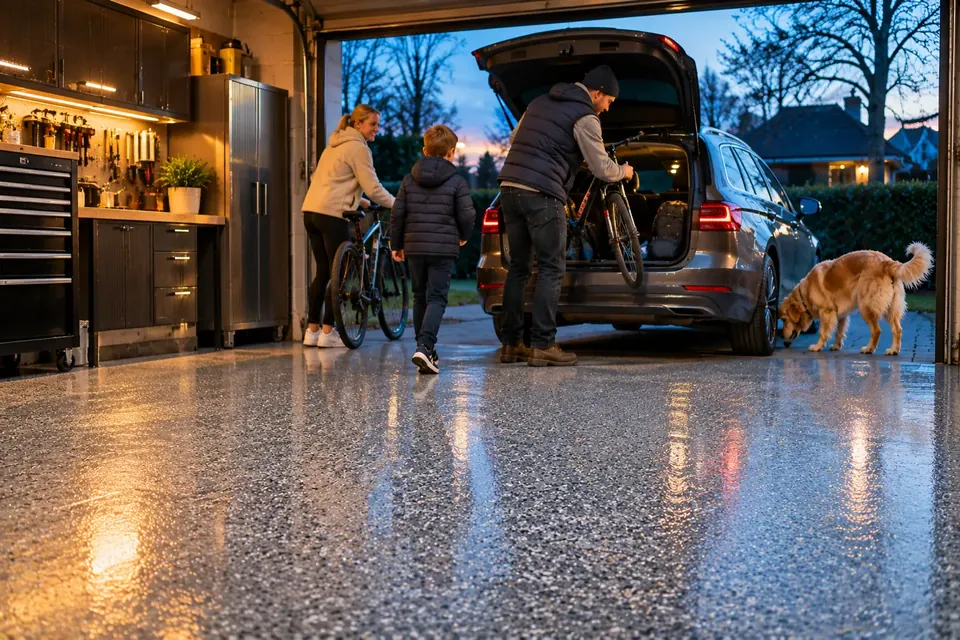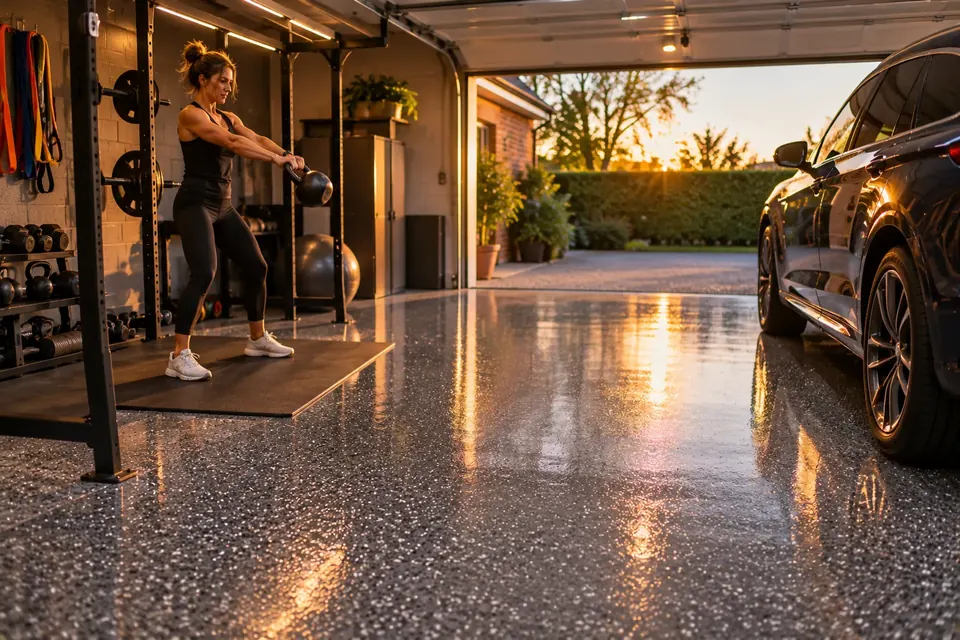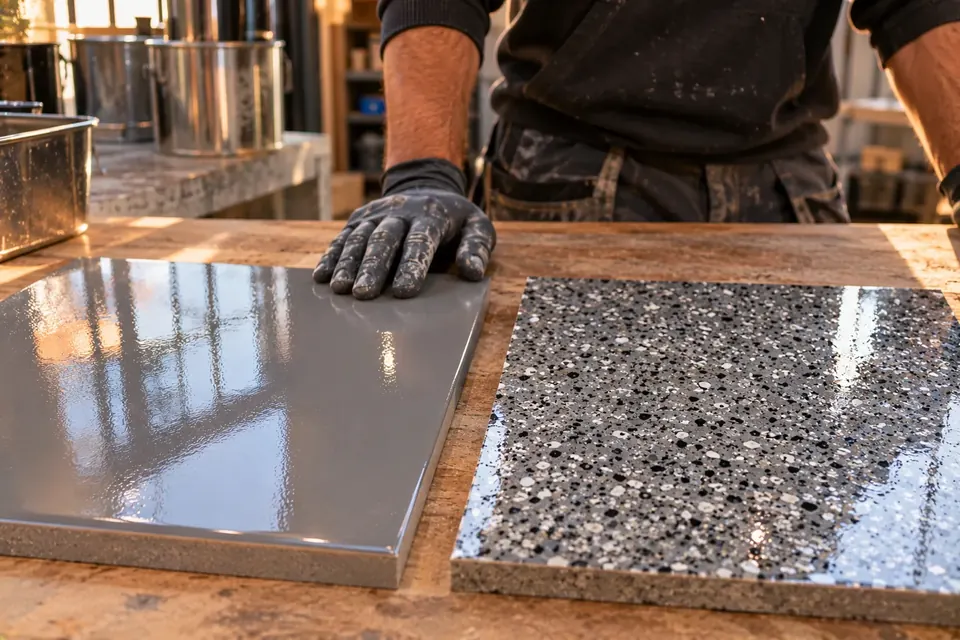
Epoxy is the tried-and-tested choice: strong, well bonded and usually cheaper, but slower to cure and prone to ambering in sunlight. Polyaspartic cures much faster, holds its colour better in UV light and is often used as a tough topcoat, but costs more and is harder to lay well because it sets so quickly. Many of the best garage floors use both: an epoxy base with a polyaspartic topcoat.
Quick comparison
| Epoxy | Polyaspartic | |
|---|---|---|
| Guide price per m² (UK, before VAT) | Garage floors £60 to £100 | £50 to £100 (indicative) |
| Cure to walk on | Often around a day | Often a few hours |
| Back in full use | Often several days | Often a day or so |
| UV and colour stability | Can amber in sunlight | Generally good |
| Bond to concrete | Excellent | Good, prep critical |
| Working time for installer | Longer | Short |
| Thickness per coat | Can be built up thick | Usually thinner coats |
| DIY friendly? | Kits exist | Best left to pros |
Prices are guides based on our cost guide. Few UK installers publish polyaspartic prices, so treat that range as indicative.
What is epoxy?
Epoxy is a two-part resin: a base and a hardener that react to form a hard plastic layer. It sticks very well to properly prepared concrete, can be built up into thick, hard-wearing layers and is relatively forgiving to apply. It’s been used on industrial and garage floors for decades.
Its main weaknesses are cure time and sunlight. Epoxy takes longer to harden, especially in a cold UK garage. Many epoxies also yellow or amber when exposed to UV. That’s why epoxy floors are often finished with a clearer, more UV-stable topcoat.
What is polyaspartic?
Polyaspartic is a type of polyurea coating. Its big selling point is speed: it can cure in hours rather than days, which means a garage can sometimes be coated and back in use far sooner. It’s also generally more UV-stable, so it suits garages with the door open to the sun, conservatories and spaces near large glazed doors. See our polyaspartic floors page for examples.
The flip side is that it gives the installer very little working time. It has to be mixed and laid quickly and evenly, so experience matters even more than with epoxy. It’s also usually more expensive per litre.
Which is better for a garage?
There isn’t a single winner. It depends on how you use the space.
Choose epoxy if
- budget matters most
- the garage is mostly shaded
- you can leave it out of use for several days
- you want a thick, solid build-up on rough concrete
Choose polyaspartic if
- you need the garage back quickly
- the floor gets direct sunlight
- you want a clear topcoat that stays clear
- the installer has a proven track record with it
Consider a hybrid
A common professional system is an epoxy primer and base coat for adhesion and build, with flakes broadcast in, then a polyaspartic clear topcoat for wear and UV resistance. It combines the strengths of both. Ask installers whether they offer this and how it changes the price.
What about durability?
Both can last a long time when the floor is prepared properly. Manufacturers on both sides make strong claims, so be cautious of any installer who says one is always better. The real difference in how long a floor lasts usually comes down to:
- grinding or shot blasting, not just acid etching
- dealing with damp before coating
- the right thickness for the use
- the right temperature and humidity on the day
These matter more than the chemistry. Our article on how long epoxy flooring lasts goes into this.
Hot tyre pickup
Hot tyres can soften and lift some coatings, especially thin DIY ones or floors driven on too soon. Both a properly cured epoxy system and polyaspartic resist this well. The key is a good bond, enough thickness and waiting the full cure time before parking. See epoxy floor cure times.
What it means for your budget
For a typical double garage of about 30 m², a straightforward epoxy system at £60 to £100 per m² works out at roughly £1,800 to £3,000 before VAT. A full polyaspartic system or a hybrid with a polyaspartic topcoat may sit within or slightly above that range depending on the installer. The difference is often smaller than people expect, because the prep, repairs and labour cost the same whichever chemistry goes on top.
That’s why it’s worth asking for both options on the same quote. Seeing them side by side, with the same prep and the same number of coats, makes the choice much clearer. If the gap is small, the faster cure and better colour stability of polyaspartic may be worth paying for. If you’re on a tight budget and the garage is shaded, a well-laid epoxy system is still a very good floor.
FAQs
Is polyaspartic better than epoxy?
Not always. Polyaspartic cures faster and resists UV better, but epoxy bonds very well, builds thicker and usually costs less. For many garages a mix of the two works best.
Does epoxy turn yellow?
Many epoxies amber over time in sunlight. A UV-stable topcoat, such as polyaspartic or polyurethane, helps protect the colour.
Can I put polyaspartic over an existing epoxy floor?
Sometimes, if the old floor is well bonded and is abraded first. An installer will need to check it.
Is polyaspartic DIY friendly?
Generally no. It sets fast and needs quick, even application. It’s best left to experienced installers.
Find a checked installer near you
Ask local installers which system they’d recommend for your space and why. Find installers near you and check each firm’s Legit Score before you invite quotes.