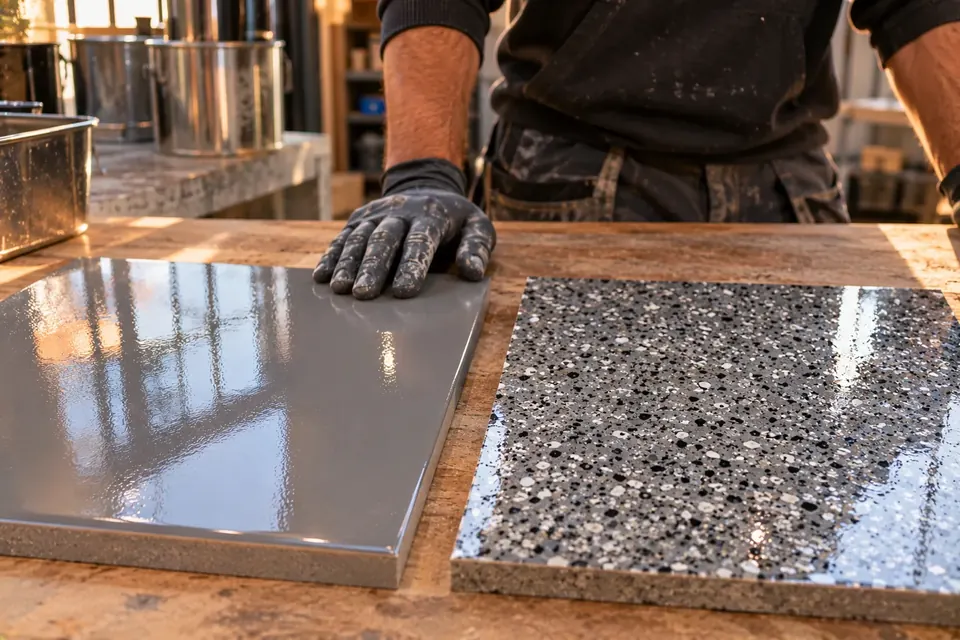
As a rough guide, most epoxy floors can take light foot traffic after about a day, furniture and normal use after a few days and cars after around a week. Full chemical cure can take about a week or more. Cold, damp conditions in a UK garage slow everything down, while fast-cure systems like polyaspartic can cut these times sharply. The product’s own data sheet and your installer’s advice always come first.
Quick timings
| Stage | Standard epoxy (around 20°C) | Fast-cure systems |
|---|---|---|
| Touch dry | Several hours | Often under an hour or two |
| Recoat window | Usually within a day | Often same day |
| Light foot traffic | About 24 hours | Often a few hours |
| Furniture, normal use | 2 to 3 days | About a day |
| Cars | About 5 to 7 days | Often a day or two |
| Full chemical cure | About 7 days or more | Often a day or two |
These are typical figures, not guarantees. Always follow what your installer tells you for your product and conditions.
Dry vs cured: what’s the difference?
Dry means the surface isn’t tacky. Cured means the chemical reaction between resin and hardener has finished and the floor has reached its full hardness and chemical resistance. A floor can feel dry long before it’s cured. Using it too hard too soon is a common cause of marks, scuffs and peeling.
Why temperature matters so much
Epoxy cures by a chemical reaction that slows down in the cold. Many products are designed around 20°C. In a cold garage in winter, cure times can be much longer. Below the product’s minimum temperature the floor may not cure properly at all.
Humidity matters too. Damp air and cold concrete can cause condensation on the surface, leading to a cloudy, sticky film called blush that can stop later coats bonding. See epoxy floor bubbles and yellowing for more on surface defects.
Tips for cold months
- ask your installer whether the garage needs warming before and during laying
- keep the space at a steady temperature, not hot then cold
- allow extra days before driving on it
How long before you can drive on it?
This is where people most often get caught out. Hot tyres from a drive can soften a coating that isn’t fully cured and lift it when you pull away. That’s called hot tyre pickup. It’s one of the classic causes of epoxy floor peeling.
For standard epoxy, waiting around a week before parking is a common rule of thumb. In cold weather, wait longer. When you do first park, it’s sensible to let tyres cool before driving in if you’ve been on a long run.
Fast-cure options
If you can’t be without your garage or business floor for a week, ask about faster systems:
- Polyaspartic coatings can often take foot traffic in hours and vehicles much sooner. See epoxy vs polyaspartic.
- Fast-cure epoxies are formulated to set quicker.
- MMA resins are used in commercial settings where a floor must be back in use within hours.
These usually cost more and give the installer less working time, so experience matters.
Total project time
Curing is only part of it. A typical garage job looks something like this:
- Day 1: Clear the space, grind or shot blast, repair cracks, prime.
- Day 2: Body coat, with flakes if chosen.
- Day 3: Topcoat.
- Days 4 to 10: Curing before full use and vehicles.
Some systems combine stages and some floors need extra repair days. Your installer should give you a timetable.
Looking after a new floor
- walk on it in clean socks or soft shoes for the first few days
- don’t drag anything across it
- don’t put down rugs or mats until it’s fully cured
- avoid water and cleaning products for the first week unless told otherwise
Planning around the cure time
A little planning makes the wait much easier. For a garage, find somewhere else to park for a week and move anything you’ll need out before work starts. For a kitchen or living area, agree when appliances and furniture can go back and who will move them. For a business, plan the work for a quiet period and ask the installer about phased laying so part of the floor stays open.
If the work is booked for winter, ask the installer what temperature the space needs to be and for how long. Some may bring heaters or ask you to keep the heating on at a steady level. It’s also worth asking what happens if the weather turns cold during the cure. A good installer will give you clear dates in writing so you know when each stage is safe.
FAQs
How long before you can walk on epoxy?
Usually about 24 hours for light foot traffic at around 20°C. Fast-cure systems can be sooner. Cold weather makes it longer.
How long before you can park on an epoxy garage floor?
Around 5 to 7 days for standard epoxy is common. Wait longer in cold weather and follow your installer’s advice.
Does epoxy cure in the cold?
It cures more slowly and may not cure properly below the product’s minimum temperature. Installers may heat the space during laying.
Can I speed up epoxy curing?
Gentle, steady warmth helps. Don’t use direct heaters on the surface. Ask your installer before changing conditions.
Find a checked installer near you
A good installer will tell you exactly when you can use your floor and plan around the weather. Find installers near you and check each firm’s Legit Score.