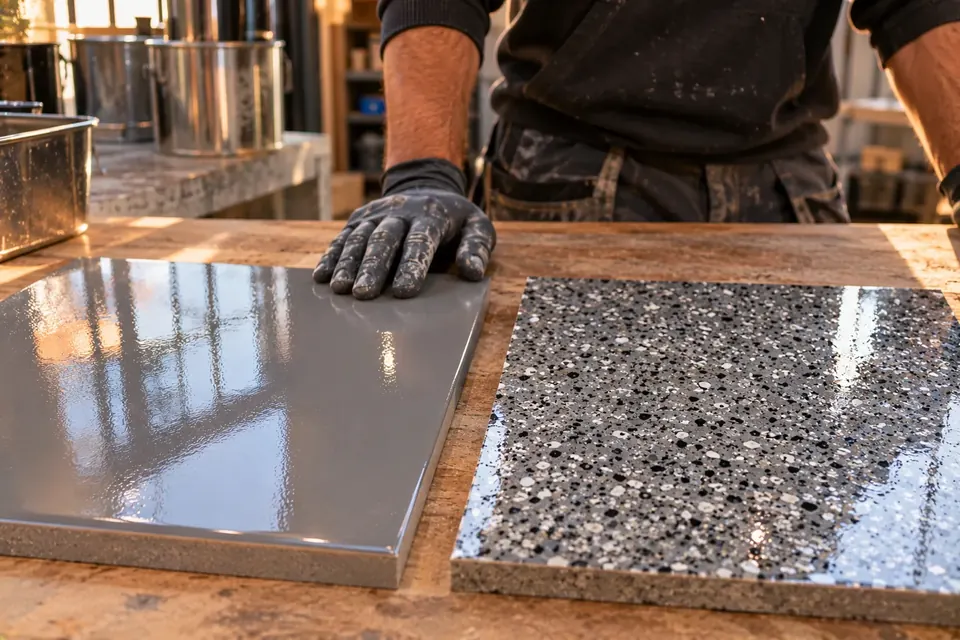
A smooth, glossy resin floor can be slippery when wet, but resin can also be one of the most slip-resistant floors available. Grip comes from texture: installers add fine aggregate to the topcoat or broadcast grit into the resin. In the UK, slip resistance is usually measured with a pendulum test. The HSE regards a wet Pendulum Test Value (PTV) of 36 or more as low slip potential. Ask for wet test results, not just dry ones.
Quick facts
| Smooth gloss resin, dry | Generally fine underfoot |
| Smooth gloss resin, wet | Can be slippery |
| Textured or anti-slip resin, wet | Can be very grippy |
| UK test | Pendulum test, giving a PTV |
| Low slip potential | Wet PTV of 36 or more |
| Trade-off | More texture is harder to clean |
How slip resistance is measured
The pendulum test
The pendulum test swings a rubber slider, which mimics a shoe heel, across the floor and measures the drag. The result is a Pendulum Test Value (PTV). It’s the main method UK health and safety guidance uses for pedestrian floors. It can be done dry or wet, on site or in a lab.
As a broad guide used in UK guidance:
| Wet PTV | Slip potential |
|---|---|
| 0 to 24 | High |
| 25 to 35 | Moderate |
| 36 and above | Low |
R ratings
Some products also quote an R rating (R9 to R13) from a German ramp test. It’s a different test and doesn’t convert directly to PTV. If you need a UK-standard figure, ask for PTV.
Surface roughness
Some installers measure roughness with a meter. It’s a useful extra check but not a replacement for a PTV.
How resin is made slip-resistant
Fine additive in the topcoat
A fine powder or bead mixed into the topcoat adds a subtle texture. It suits homes, showrooms and areas that are only occasionally wet. It changes the look very little.
Broadcast aggregate
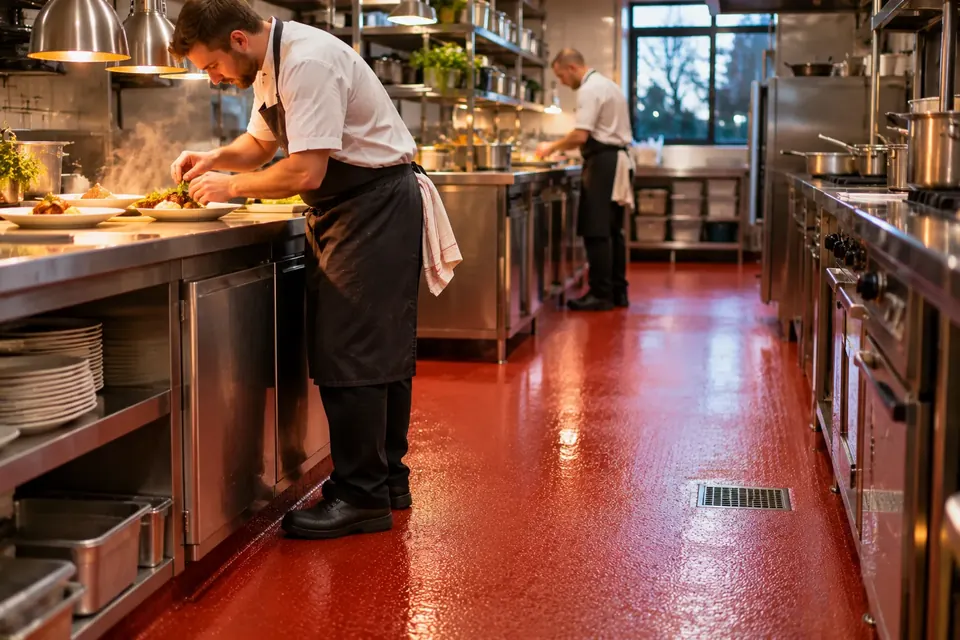
Sand, quartz or harder grits are scattered into wet resin, then sealed in with a topcoat. The size of grit controls how grippy and how rough the floor is. Commercial kitchens, breweries, ramps and wash-down areas often need this.
Textured screeds
Heavy-duty polyurethane screeds can be laid with a built-in texture for very wet or greasy areas.
The trade-off: grip vs cleaning
More texture means more grip but also a surface that holds dirt and takes more effort to clean. The right balance depends on the space:
- Home kitchen or living area: smooth or lightly textured, with mats at sinks and doors
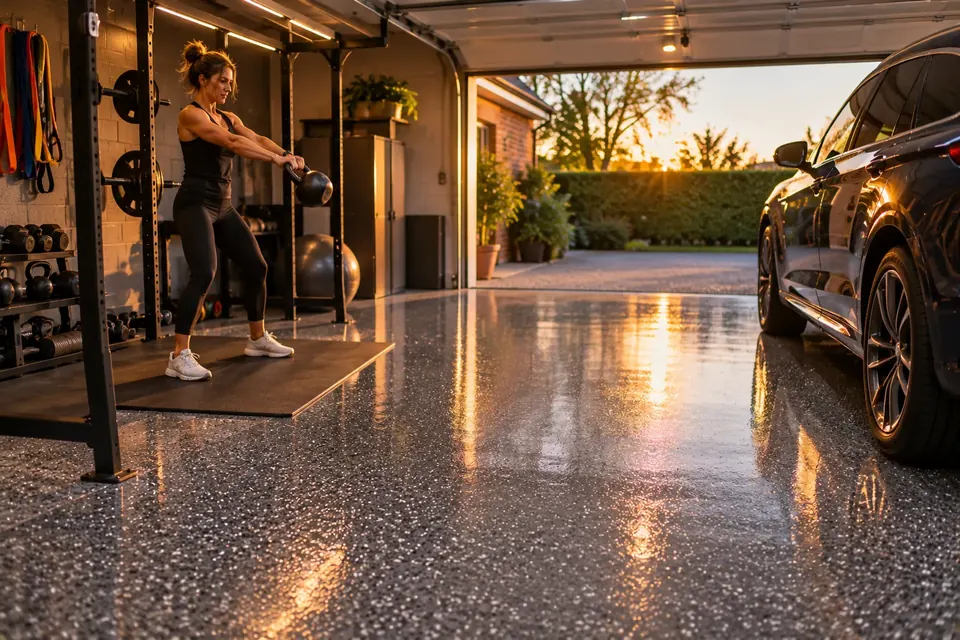
- Garage: lightly textured, especially near the door where rain comes in
- Commercial kitchen or brewery: medium to coarse texture, with the right cleaning regime
- Ramps and external areas: coarser texture
A good installer will talk this through with you rather than just picking one.
At home
Many home resin floors are laid smooth with a satin or gloss topcoat. They’re fine when dry, but a wet patch by the sink or back door can be slippery, particularly in socks. Ask about a fine anti-slip additive in the topcoat for kitchens, utility rooms and around doors. Our guide to resin kitchen floors covers other things to think about.
At work
Employers have a duty to manage slip risks. If your floor gets wet or contaminated, ask your installer:
- What wet PTV will the finished floor achieve?
- Is that figure from a test of the actual system, ideally on site?
- How will the texture hold up as it wears?
- What cleaning method and products should we use?
Floors in food areas and wet processes need careful specification. See our commercial and industrial floors page and the guide to industrial epoxy flooring costs.
Keeping a floor safe over time
- clean regularly with the right product: residue from the wrong cleaner can make floors slippery
- deal with spills quickly
- watch for areas where texture has worn smooth, such as busy walkways
- recoat or re-texture worn areas before they become a risk
Garages and outdoor areas
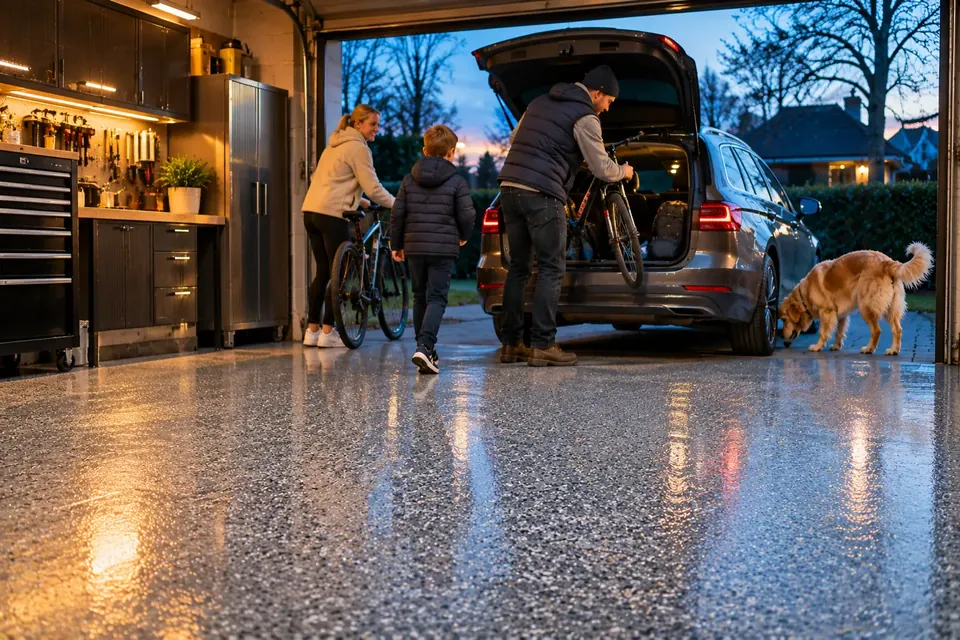
Garages are a special case. Rain and snow come in on tyres and pool near the door, while the rest of the floor stays dry. A flake floor gives a little texture by itself. A fine anti-slip additive in the topcoat adds more. Some people choose a slightly coarser texture in the first metre or two inside the door and a smoother finish further in.
Outdoor resin is different again. Resin bound driveways and paths are naturally textured because of the stone, so they usually give good grip. Resin bonded surfaces are even grippier, which is why they’re often used on slopes. Smooth resin coatings are rarely a good idea outside unless they have plenty of texture. If you’re unsure, ask the installer to show you a sample wet and try it with your own shoes.
FAQs
Is epoxy flooring slippery when wet?
A smooth, glossy epoxy floor can be. Adding an anti-slip additive or aggregate makes it far grippier.
What PTV do I need?
UK guidance treats a wet PTV of 36 or more as low slip potential. Some areas may need higher.
Can anti-slip be added to an existing resin floor?
Often yes, by abrading the floor and applying a new textured topcoat.
Does anti-slip resin look different?
Fine additives barely change the look. Coarse aggregate gives a visibly textured, matt surface.
Find a checked installer near you
Ask installers what slip rating their finished floors achieve and how they test it. Find installers near you and check each firm’s Legit Score.