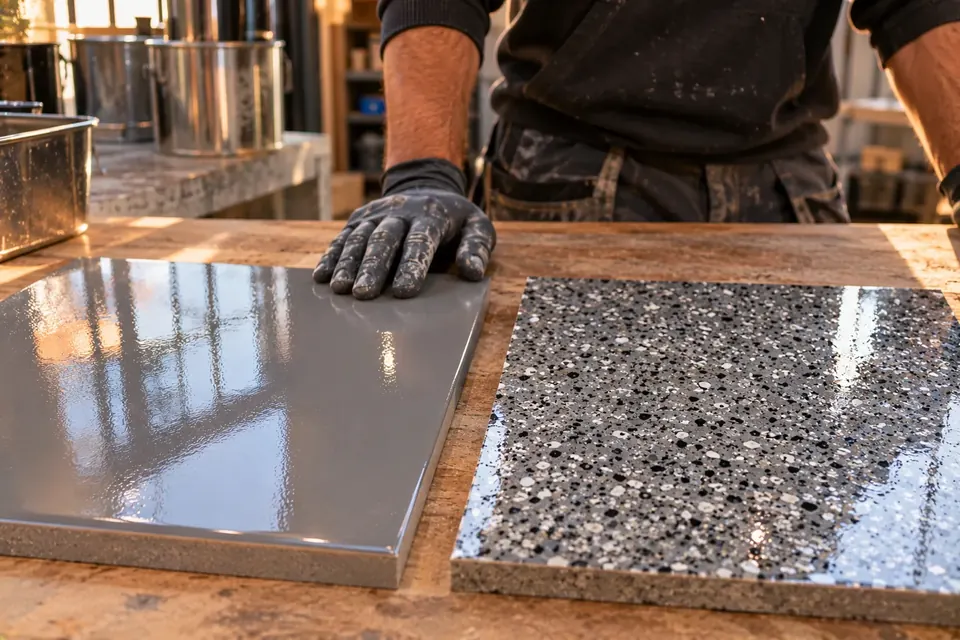
Yes, resin flooring can often go over existing tiles, as long as they’re firmly bonded, flat and properly prepared. The glaze is ground off, grout lines are filled and a primer goes on before the resin. Floorboards are harder. They move, so they usually need an overlay board or a flexible system before resin can go down. Hollow, cracked or loose tiles must come up first. An installer should check your floor in person before saying yes.
Quick guide
| Existing floor | Can resin go over it? | What’s needed |
|---|---|---|
| Sound ceramic or porcelain tiles | Often yes | Grind glaze, fill grout, prime |
| Loose, hollow or cracked tiles | No | Remove and repair base |
| Quarry tiles | Often yes | Clean, grind, check for damp |
| Vinyl or lino | No | Remove, clean off adhesive |
| Floorboards | Sometimes | Overlay boards, flexible system |
| Chipboard or plywood deck | Sometimes | Must be stiff, often overlaid |
| Concrete or screed | Yes | Standard prep |
Resin over tiles
Why it can work
Resin is thin, so laying it over tiles adds very little height. That avoids the mess, dust and cost of lifting tiles and keeps thresholds and doors as they are. Many installers lay over tiles in kitchens, utility rooms and commercial spaces.
What makes tiles suitable
- Firmly bonded. Tap each tile. A hollow sound means it’s lifting from the base and will crack through.
- Flat. Lipping between tiles needs grinding down.
- Sound grout. Crumbling grout needs raking out and filling.
- Dry. Old quarry tiles on solid floors sometimes have damp beneath.
How it’s prepared
- Check every tile and remove any loose ones.
- Grind off the glaze so the primer can bond.
- Fill grout lines and any gaps so they don’t show through.
- Apply a primer suited to tiles.
- Lay the resin system, often with a thin levelling layer first.
On glossy finishes, grout lines can “ghost” through if not filled and levelled properly. Ask the installer how they’ll prevent this.
Resin over floorboards
The problem
Timber floors move with temperature, humidity and footfall. Resin is a hard, continuous layer. If it goes straight onto boards, it can crack along the joints.
How installers deal with it
- screw down any loose boards and replace damaged ones
- fix a rigid overlay board over the top, such as a cement-based or gypsum fibre board
- use a more flexible resin system suited to timber
- make sure the floor is stiff enough not to bounce
It’s more work and not every installer does it, so ask early. Upper floors also need checking for weight if a thicker system is planned.
Vinyl, lino and carpet
These always need to come up, along with any adhesive or underlay. Resin can’t bond to soft or flexible coverings.
When to rip up instead
Sometimes lifting the old floor is the better choice:
- lots of loose or hollow tiles
- signs of damp under the tiles
- the floor needs levelling anyway
- you’re adding underfloor heating
See resin floors and underfloor heating if heating is part of your plans.
Cost
Laying over tiles can save on removal, but grinding, filling and priming take time. Overall it’s often similar to or a little cheaper than lifting and preparing a bare slab. Home resin floors typically cost £40 to £100 per m² before VAT. See resin flooring cost for the full picture. Our home resin floors page shows the finishes.
Height, doors and thresholds
One of the big advantages of laying over tiles is height. Most home resin systems add only a few millimetres, so doors usually still close and thresholds stay level with the next room. If a levelling layer or overlay board is needed, the build-up grows and doors may need trimming.
Ask the installer to measure the finished floor height before work starts, especially where the resin meets carpet, wood or another room. Neat edge trims make these transitions tidy. It’s also worth checking around the dishwasher and fridge spaces in a kitchen, because a few extra millimetres can make it tight to slide appliances back in.
What the installer will check
When an installer visits to look at a tiled floor, expect them to tap tiles across the room to listen for hollow spots, check the floor with a long straight edge for dips and lips, look at the grout and test for damp, especially on older solid floors. On timber floors they’ll walk the room to feel for bounce, look for loose or squeaky boards and check what’s underneath if they can. They may also ask what the room is used for, because a busy kitchen needs a tougher system than a quiet bedroom.
If an installer quotes for laying over tiles or boards without doing any of this, be cautious. The base is what decides whether the floor lasts, so a proper look at it is time well spent.
FAQs
Can epoxy go over tiles?
Yes, if the tiles are firmly bonded and flat. The glaze must be ground off and grout lines filled first.
Will grout lines show through resin?
They can if they’re not filled and levelled properly. A good installer fills them and may lay a thin levelling coat.
Can resin go on wooden floorboards?
Sometimes, usually with a rigid overlay board and a flexible resin system. Boards must be secure and the floor stiff.
Does resin over tiles crack?
It can if the tiles are loose or the base moves. Sound, well-prepared tiles give a stable base.
Find a checked installer near you
Not every installer works over tiles or timber, so ask early. Find installers near you and check each firm’s Legit Score before booking a survey.