A professionally laid epoxy floor can last many years, often well over a decade in a home or garage, if the concrete was properly prepared and the system suits the use. A thin DIY coating may only last a year or two before it wears or peels. The things that decide lifespan are preparation, damp, thickness, traffic and how the topcoat is looked after, not the word “epoxy” on the tin.
Quick guide to lifespan
| Floor type | What decides how long it lasts |
|---|---|
| DIY garage paint kit | Thin coat, light prep: often the shortest life |
| Pro garage coating | Grinding, damp control, topcoat |
| Home resin floor | Base quality, grit, topcoat care |
| Self-levelling commercial | Thickness vs traffic |
| Heavy-duty screed | Built for loads, impact and chemicals |
We don’t quote a fixed number of years because there’s no reliable UK data on it. Treat any firm’s “lasts 20 years” claim as a sales line unless it’s backed by a written guarantee.
What makes an epoxy floor last
1. Preparation
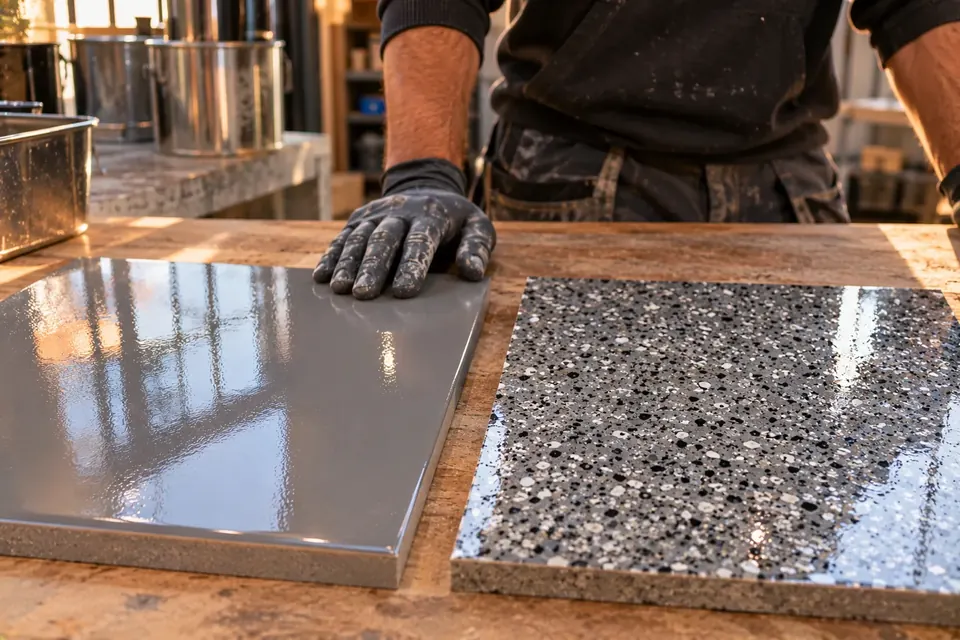
This matters more than anything else. Concrete has a weak, dusty top layer called laitance, plus oil, old paint and sealers. If the resin bonds to that, it’ll lift with it. Diamond grinding or shot blasting removes the weak layer and opens the surface so the resin grips solid concrete.
2. Damp control
Moisture rising through a slab can push a coating off from beneath. Older garages and ground floors often have no damp-proof membrane. A good installer tests for moisture and uses a moisture-tolerant primer or membrane where needed. Read more in why epoxy floors peel.
3. The right thickness for the use
A coating a fraction of a millimetre thick can be fine for a storage room but will wear through under forklifts. Heavier traffic needs a thicker system. See our commercial and industrial floors page for the heavier options.
4. A good topcoat
The topcoat takes the wear. A UV-stable polyurethane or polyaspartic topcoat resists scratches and yellowing better than bare epoxy. It can also be refreshed later without redoing the whole floor.
5. Proper curing
Using a floor too soon, especially driving on it, can mark or lift the coating. Cold garages slow curing. See epoxy floor cure times.
What shortens a floor’s life
- grit and sand ground in by shoes and tyres
- dragging heavy items or furniture
- harsh cleaning chemicals not suited to the topcoat
- standing water and road salt left on garage floors
- hot tyres on a floor that hasn’t fully cured
- strong sunlight on epoxy without a UV-stable topcoat
Signs your floor is nearing the end
- the topcoat looks dull and worn in traffic lanes
- patches where the colour coat shows through
- lifting, flaking or hollow-sounding areas
- bubbles or blisters appearing after installation
- yellowing that won’t clean off
Dull or worn topcoats can often be fixed by abrading and recoating. Lifting or blistering usually points to a bond or damp problem, which needs an installer to look at.
How to make your floor last longer
- Put mats at doors to catch grit.
- Sweep or dust-mop often, then clean with a pH-neutral cleaner.
- Use felt pads on furniture and mats under car tyres if you wish.
- Wipe oil and chemicals up promptly.
- Recoat the topcoat when it starts to look worn, before the colour coat is exposed.
Ask about guarantees
A written guarantee tells you what the installer is prepared to stand behind. Ask what it covers (workmanship, materials or both), how long it lasts and what voids it. A firm that’s been trading a while and has a track record of local jobs is in a better position to honour one. You can check how established a firm looks with our Legit Score.
Garage, home and business compared
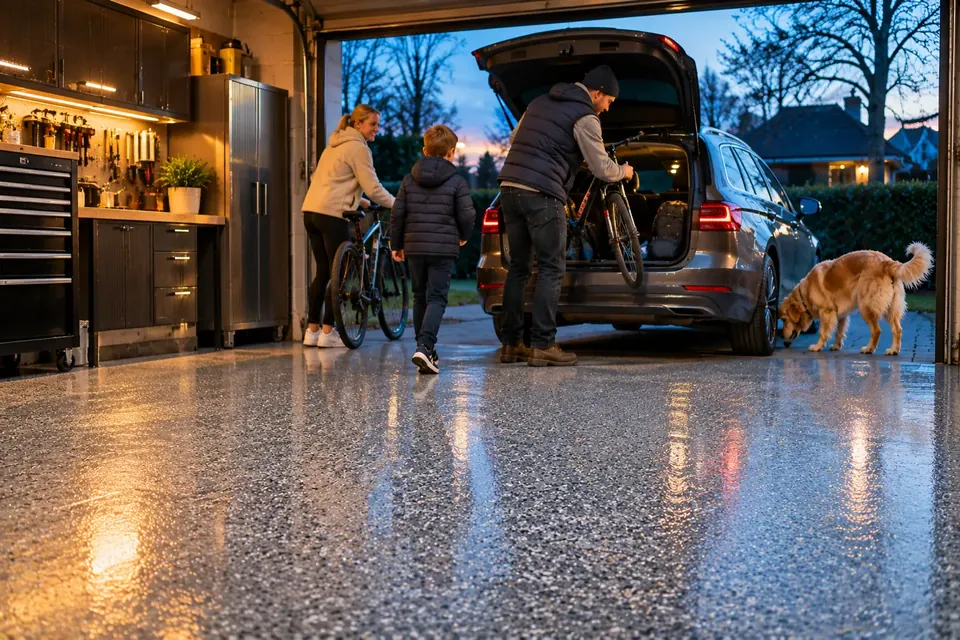
Garages face the toughest mix for a home floor: hot tyres, road salt, oil and often damp rising through an old slab. A ground and primed system with a good topcoat copes well. A thin paint does not.
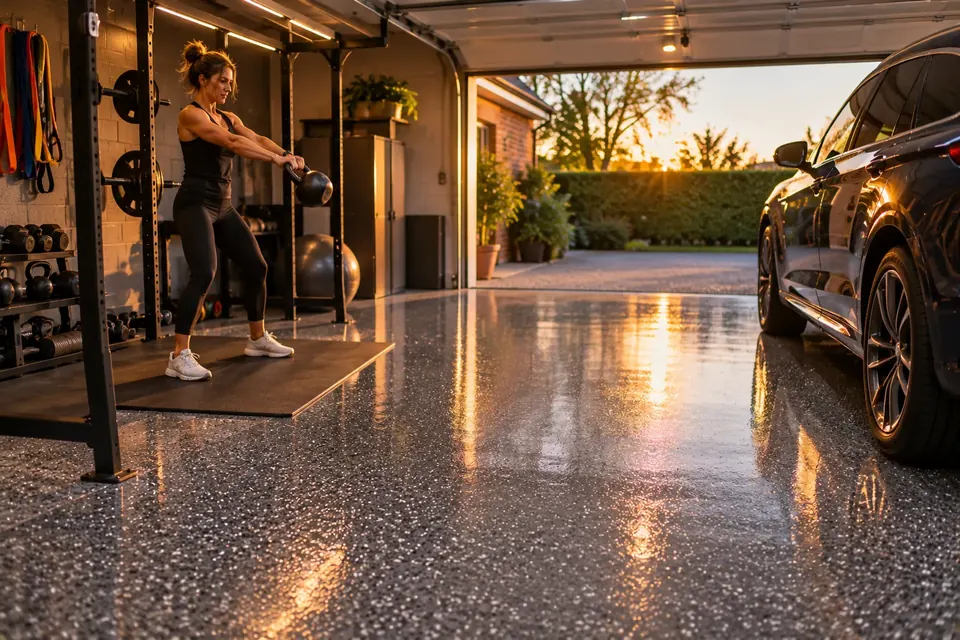
Homes are gentler. The main enemies are grit on shoes, chair legs and sunlight through big windows. With mats, felt pads and a UV-stable topcoat, a home floor can keep its looks for a long time.
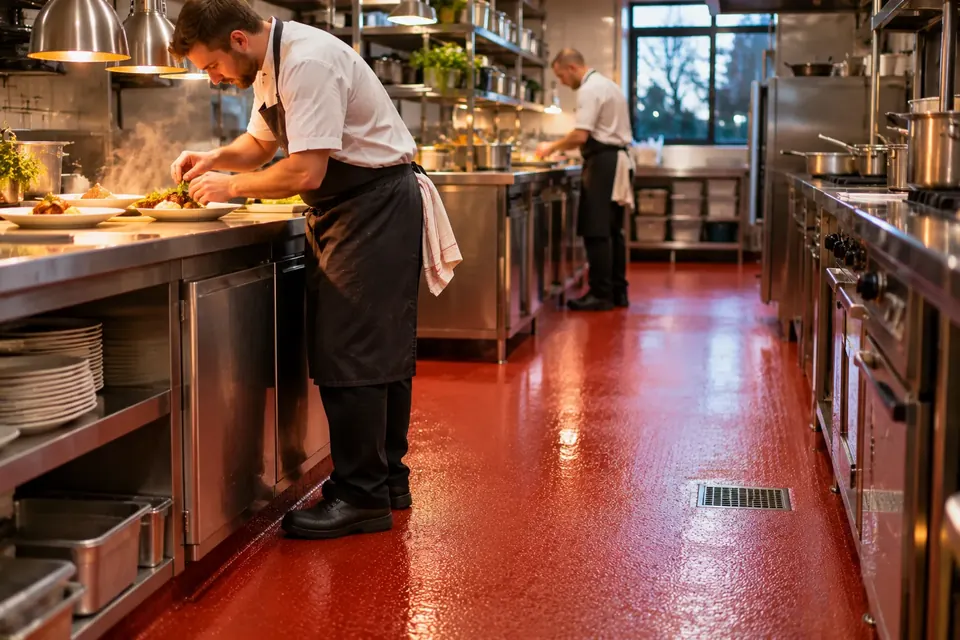
Businesses vary the most. A dry storage area may barely wear a coating, while a forklift route or a hot wash-down area can wear through a thin system quickly. Matching the system to the traffic matters far more than the brand on the tin. If you’re unsure, describe exactly how the floor will be used and ask the installer to explain why the system they suggest will cope.
FAQs
How long does an epoxy garage floor last?
A well-prepared professional system can last many years in a typical home garage. Thin DIY coatings usually wear or peel far sooner.
Does epoxy flooring wear out?
The topcoat wears first, especially in walkways and tyre tracks. Recoating it before it wears through extends the floor’s life.
Can an old epoxy floor be recoated?
Often yes, if it’s still well bonded. It’s abraded and a new topcoat applied. Lifting areas need repairing first.
Why did my epoxy floor fail so quickly?
Usually poor prep, damp or using it before it cured. Ask an installer to look at the cause before recoating.
Find a checked installer near you
The best way to get a long-lasting floor is to hire someone who preps properly. Find installers near you and check each firm’s Legit Score before you book.