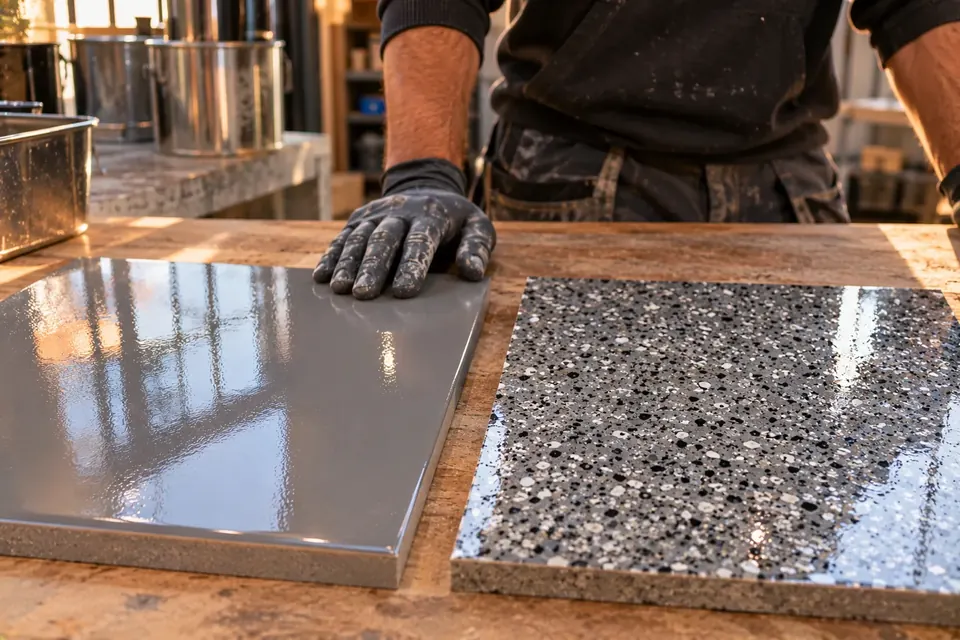
A resin kitchen floor gives you a seamless, wipe-clean surface with no grout lines, works well with underfloor heating and can run through an open-plan space without a break. The downsides are cost compared with some tiles or vinyl, a surface that shows scratches if it’s high gloss, the need for a sound, dry base and that it’s hard to change later. A home resin floor typically costs £40 to £100 per m² before VAT, so a 25 m² kitchen is roughly £1,000 to £2,500.
Quick facts
| Guide price | £40 to £100 per m² before VAT |
| 25 m² kitchen | About £1,000 to £2,500 |
| Typical thickness | A few mm for poured systems |
| Underfloor heating | Generally compatible |
| Finish options | Gloss, satin or matt; solid, flecked or metallic |
| Time on site | Usually 2 to 4 days |
Prices are guides from our cost guide. Prep, room shape and region all change the final figure.
The pros
Seamless and hygienic
No grout lines means nowhere for crumbs and spills to hide. That’s why resin is so widely used in commercial kitchens and hospitals. At home it makes mopping quick.
One floor through open-plan spaces
Resin can run from kitchen to dining and living areas with no joins or thresholds. It suits modern extensions with large glazed doors.
Works with underfloor heating
Resin is thin, so heat passes through well. It needs to be laid once the screed is properly dry and the heating has been commissioned. See resin floors and underfloor heating.
Hard-wearing
A well-laid system copes with chairs, dropped pans and daily traffic. A topcoat adds scratch and stain resistance.
Lots of design choice
Solid colours, subtle flecks, concrete-look finishes or bold metallic effects. You can also choose the sheen.
The cons
Scratches show on high gloss
Grit under shoes and chair legs can mark a gloss topcoat. A satin or matt finish hides wear much better in a busy family kitchen.
Needs a good base
Resin needs a flat, sound and dry concrete or screed. Old tiles, floorboards or a damp slab may need work first. See can you put resin flooring over tiles?
Can feel hard underfoot
Like stone or tiles, resin is a hard surface. Rugs help in seating areas. It does feel warmer than tiles, especially with underfloor heating.
Hard to change
Getting resin up means grinding it off. Choose colours you’ll still like in years to come.
Slippery when wet if very smooth
A wet gloss floor can be slippery. Ask about a fine anti-slip additive in the topcoat for kitchens.
Epoxy or polyurethane for a kitchen?
Home kitchens often get a polyurethane resin or an epoxy base with a polyurethane topcoat. Polyurethane is a bit more flexible and handles temperature changes and UV better, while epoxy is very hard and bonds strongly. Many installers use a combination. Ask what they recommend and why.
Living with a resin kitchen floor
- Use a pH-neutral cleaner and a microfibre mop.
- Put a doormat at outside doors to catch grit.
- Fit felt pads to chair and table legs.
- Wipe up hot fat and strong spills quickly.
- Avoid dragging heavy appliances.
Planning the job
- Decide early, ideally before the screed goes down in a new extension.
- Ask the installer when the screed will be dry enough to coat.
- Plan for the kitchen to be out of use for several days.
- Decide whether units go in before or after. Many installers prefer to lay before kickboards are fitted.
- Ask for samples in your chosen finish and look at them in your own light.
Choosing a colour and finish
Colour matters more than people expect on a seamless floor. Very dark colours look dramatic but show dust, crumbs and pet hair. Very light colours show dirt and can look stark in a north-facing room. Mid greys, warm stone tones and flecked finishes are the most forgiving in a busy family kitchen.
Sheen matters too. Gloss reflects light and makes rooms look bigger, but shows scratches and smears. Satin is a good middle ground. Matt hides the most but can look flat in some light. Ask your installer for samples in two or three finishes and look at them in your kitchen in the morning and the evening. If you can see a finished floor they’ve laid, even better.
Resin compared with other kitchen floors
Compared with porcelain tiles, resin has no grout to clean and feels slightly warmer, but tiles are easier to repair one at a time. Compared with luxury vinyl, resin is harder-wearing and seamless, but vinyl is cheaper to fit and softer underfoot. Compared with polished concrete, resin is much thinner and lighter, so it suits extensions and renovations where a thick concrete pour isn’t practical. None of these is right for everyone. It comes down to the look you want, your budget and how your kitchen is used.
FAQs
Is resin flooring good for kitchens?
Yes, for most homes. It’s seamless, easy to clean and works with underfloor heating. Choose a satin or matt finish if you want to hide scratches.
How much does a resin kitchen floor cost?
Roughly £40 to £100 per m² before VAT, so about £1,000 to £2,500 for a 25 m² kitchen. Prep and finishes can push this up.
Does a resin kitchen floor scratch?
It can, especially gloss finishes. Grit is the main cause. Doormats, felt pads and a satin topcoat all help.
Can you fit kitchen units on a resin floor?
Yes. Many installers prefer to lay the floor before kickboards go on so it runs under the units’ edges.
Find a checked installer near you
A good kitchen floor starts with the right installer. Find installers near you who do home floors and check each firm’s Legit Score before booking a survey.