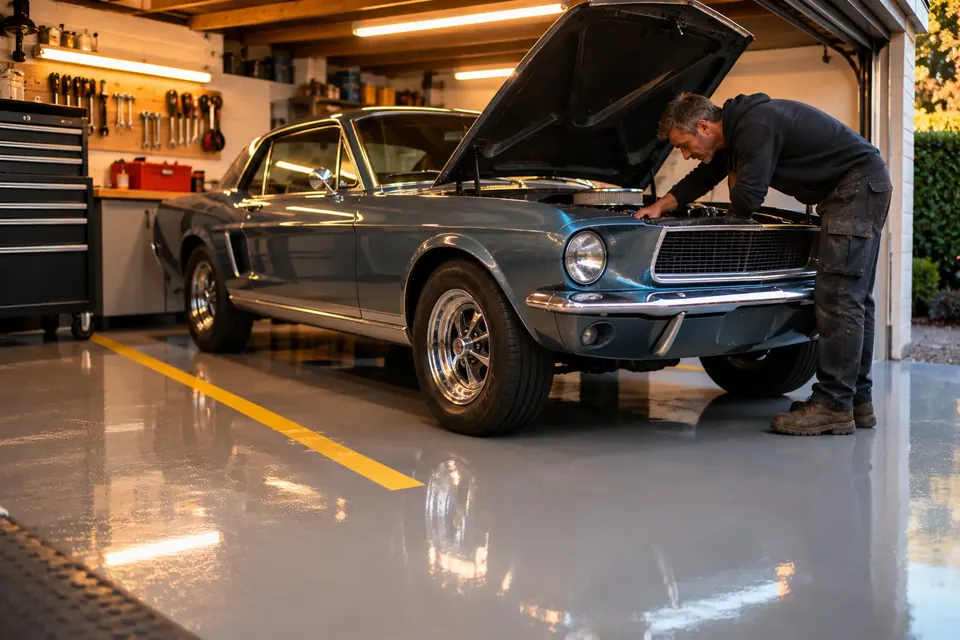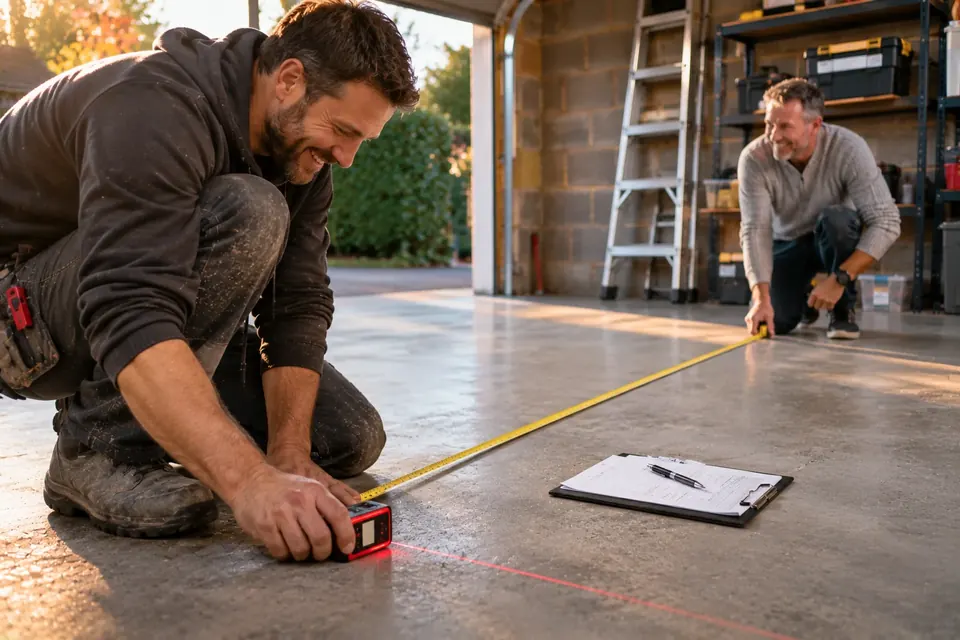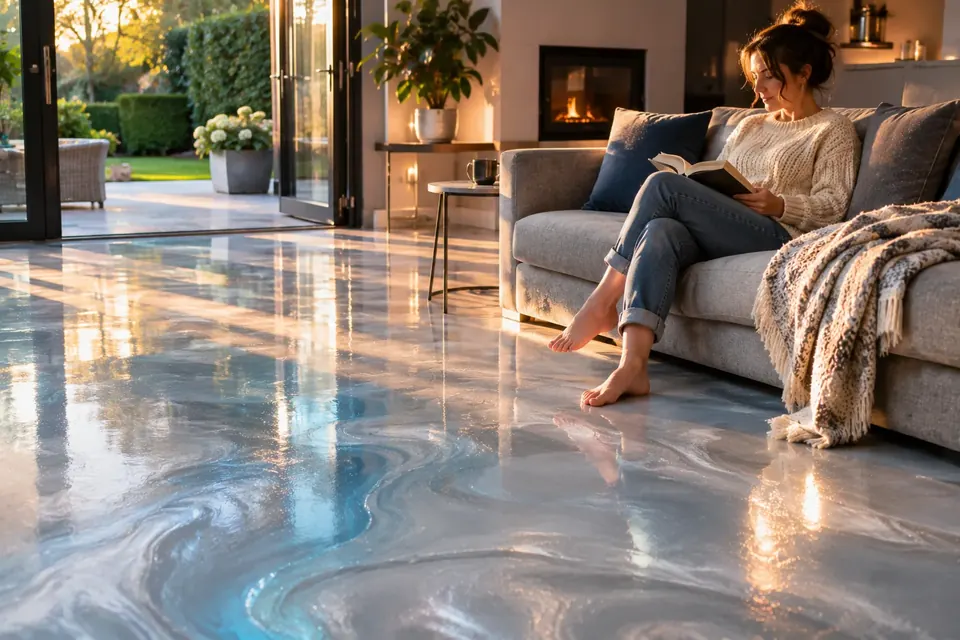
A metallic epoxy floor in the UK typically costs £70 to £135 per m² before VAT. That’s roughly £1,050 to £2,025 for a 15 m² room and £1,750 to £3,375 for a 25 m² kitchen or living space. It costs more than a plain resin floor because every metallic floor is worked by hand and depends heavily on the installer’s skill. These are guide prices based on figures UK installers publish. Your quote will vary with prep, size and region.
Quick facts
| Guide price (before VAT) | |
|---|---|
| Metallic epoxy per m² | £70 to £135 |
| 15 m² room | £1,050 to £2,025 |
| 25 m² room | £1,750 to £3,375 |
| Plain home resin floor, for comparison | £40 to £100 per m² |
| Typical time on site | 2 to 4 days |
What makes a metallic floor different
A metallic epoxy floor uses metallic pigments mixed into a clear or tinted epoxy. While the resin is still wet, the installer moves it with rollers, trowels, sprayed solvents or air to create swirls, ripples and marble or lava-like effects. No two floors look the same.
That’s what you’re paying for. Plain resin is about getting an even coat. Metallic resin is about controlling an effect that changes as it flows and cures, often with one chance to get it right before it sets. You can see examples on our metallic epoxy floors page.
The usual build-up
- Prep. Grinding the slab or screed to open it up, repairing cracks and filling dips.
- Primer. Often with a damp-tolerant primer if moisture is a risk.
- Base coat. A solid colour that sets the background tone.
- Metallic layer. The decorative coat, worked by hand.
- Topcoat. A clear seal, often polyurethane, for scratch resistance and better colour stability.
What drives the price
The installer’s skill
Metallic floors are as much craft as trade. Experienced installers charge more. It’s usually worth it. A poor metallic floor can show roller marks, patchy pigment, bubbles or a “dirty” look. There’s no simple way to fix it.
Colours and effects
More colours, layered effects or custom designs take longer. Ask to see real floors, not just sample boards.
The base
Metallic finishes are glossy and show every dip and bump. A floor that isn’t flat may need levelling first, which adds cost.
Room shape and size
Lots of doorways, cupboards or an island to work around slows things down. Small rooms cost more per m².
The topcoat
Epoxy on its own can amber in strong sunlight. A UV-resistant polyurethane topcoat helps, especially near bifold doors or rooflights. We cover this in epoxy floor bubbles and yellowing.
Is a metallic floor worth the money?
It depends on what you want from the room. If you want a seamless, eye-catching floor in a kitchen, living area, showroom or a garage that doubles as a hobby space, it’s hard to get the same look any other way. If you want something calm and understated, a plain home resin floor may suit better and cost less.
Things to think about before you commit:
- Gloss shows scratches. A satin or matt topcoat can help in busy homes.
- Pets and grit. Doormats and felt pads under furniture make a real difference.
- It’s permanent. Getting it up later means grinding it off, so be sure of the colours.
How to choose a metallic installer
- Look at real jobs. Ask for photos of finished floors and, ideally, a floor you can visit.
- Ask how they handle the topcoat. Which product do they use and why?
- Ask about damp testing. Moisture under a metallic floor can cause blistering.
- Get it in writing. Colours, effect, finish and what happens if you’re unhappy.
- Compare like with like. The same prep, layers and topcoat on each quote.
Our list of questions to ask a resin flooring installer is a good checklist for the visit.
Where metallic floors work best
Metallic epoxy looks its best where there’s space to see the movement in the finish. Open-plan kitchens, living areas, home bars, showrooms, salons and garages used as hobby spaces are all popular choices. Large unbroken areas show off the flow better than small rooms cut up by units and doorways.
It’s less suited to rooms with lots of grit and heavy wear, such as a busy hallway straight off a garden, unless you’re happy to recoat the topcoat more often. It’s also worth thinking about light. Low sun across a glossy metallic floor shows every mark and every bit of dust, while satin finishes soften this. Ask the installer to show you how the same colour looks in gloss and satin. Many people change their mind on the sheen once they see both side by side.
FAQs
How much does a metallic epoxy floor cost per m²?
Typically £70 to £135 per m² before VAT in the UK. Small rooms, complex designs and floors needing levelling sit at the higher end.
Is metallic epoxy slippery?
A glossy finish can be slippery when wet. Installers can add a fine anti-slip additive to the topcoat or use a satin finish, which helps.
Can metallic epoxy go on a wall or worktop?
Similar metallic resins are used on worktops and furniture, but they’re different products. Ask an installer who does both.
How long does a metallic epoxy floor last?
Laid well on a sound, dry base with a good topcoat, it should last for many years in a home. The topcoat may need refreshing over time in busy areas.
Find a checked installer near you
Metallic floors are only as good as the person laying them. Find installers near you who list metallic work and check each firm’s Legit Score before you book a visit.